14.3.11

hydro power

Out on Bougainville island there is a lot of creative living going on. I was lucky to meet some cool locals in a guest house on Buka island the night before i was heading to Bougainville. Warren and his wife were also heading to Bougainville so they offered for me tag along. We went up to Pavaere village, in the hills north of Arawa town.

Warren's "home made" truck. Made out of three different Toyota trucks.

sharing the front seat with the car battery


Warren set up his own electricity for his village and two others. He calls it "hydro power." Made with a river, a generator, old septic pipes from arawa town, old power lines and a power box from town. The river is reverted so he could dig his PVC pipes into the ground. Being separate from the main river the pipe is safe from floods.
The pvc pipe then runs about 100 meters down hill to give the water some momentum. The water exits the pipe and spin sprays the turbine. The turbine turns the generator on the other side in the safe shed. no gas needed.

He connected the generator to the power box to give main power switches to each village.

Then the power cords are nailed up to trees and run back up to village.“Its just common sense” warren said. they had to be creative after the crisis, they didn’t have much support from anyone. As of now the generator powers 8 houses constantly 24 hours a day. A few lights in each house and a couple tvs in the village. Warren believes the generator has enough power for 20 twenty houses.

5.3.11

Arawa, Bougainville

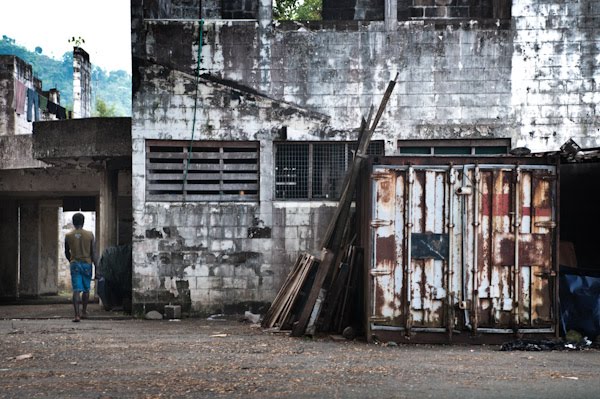
To Papua New Guinean's, Bougainville island is mostly known for the brutal civil war over the Panguna copper mine and homing some of the darkest skin in the png world. I was told over and over by locals about the imported AK's, reused WWII M-16s, and other guns in town left over from the Bougainville crisis. Asking around I found that everyone had a gun. When trying to get photographs of them I also found that everyone either kept their guns at their uncles house or buried them in the bush too far away to find. I spent three days here and loved it. Everyone was incredibly nice and very helpful. The streets and buildings in Arawa town are in terrible shape. Bougainvilles civil war is still very visible.

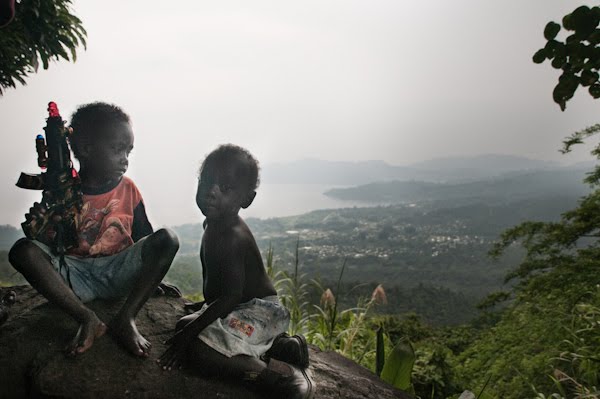
Simon and his older brother from Pavaere village overlooking Arawa town. These are the grandchildren of a Bouganville civil war fighter.


The old provincial government building was burnt down along with most of the town in the years after the local Panguna mine was shut down in 1989 . The large two story building, built on a foundation designed after a bird of paradise, now unintentionally offers a huge beer garden with multiple bia stores scattered throughout the old government grounds.


Having a few white cans with Peter Kauma in his new shop. He will keep his shop running until the government kicks him out to rebuild the provincial house.


22.2.11

Born here, die here

The image of a small tropical secluded island with too many coconut trees, green volcano landscapes and the old glowing town of Rabaul just a short walk away pictures something too beautiful for my mind see. A sound paradise for the lucky ones born there. The only way to imagine what it was like is by imagining the exact opposite of what Matupit looks like now.
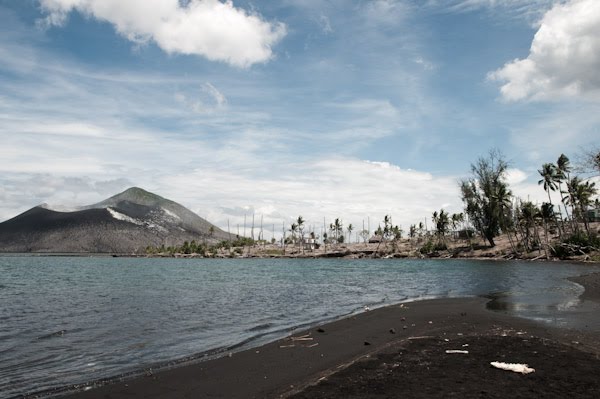
On Septemeber 19th 1994 ash began spewing out of Mt Tavurvur and Mt Vulcan while the island of Matupit sat in the Simpson Harbor directly inbetween the two volcanos. As the ash became unbearable many of the locals fled to the nearby town Kokopo, while some stubborn locals stayed behind shoveling the constant falling ash off the houses. Weeks later the government granted a large piece of land south of Kokopo for the village to relocate. While some have accepted their new land, others are still making their way back to the once beautiful island. Two to three thousand live on the island today, around 75% of the original population.

Found Menrint James wondering along the beach near his home. While some locals claim the ash has caused no health problems others said the sulpher was causing asthema and tuberculosis.

The locals mentioned the bridge to their island as we drove over it without adding the fact that it was only ash and dirt under the bridge and they did not live on an island anymore.


East side of Matupit looking toward Mt Tavurvur

Volcanic ash inside the Matupit Primary School. The two-classroom school was used for grades 1-4.


Palex Tioman with his wife and five kids outside his original house. Palex said he left the village the day the volcanoes erupted but returned the next day. He does not have a job. Coconut planations were the main source of income before the eruptions. Like many locals he survives on fishing and digging for wild fowl eggs near the volcano.


There are many houses in the town with collapsed roofs. Being too expensive to fix, some residents have tried to repair them while others built new homes out of bush materials and scavenged metal scraps.


[Thank you National. The words and some
of these photos were printed in the National's

Weekender paper, February 25th 2011]

6.2.11

awesome possum
Hote village

3.2.11

did i finish those cheese crackers last night? skibbity... b-bop durr.. man i could really go for some cheese crackers. uuaagghh.. im driggity draggity dru-dru-drunk.. baggity of chips b-bop.. yaaaa..

YOUU!!...... YOU GOT WHAT I NEEEEDD!! BUT YOU!!.. you missed it honey, i rocked biz mark on the mic down at larrys tonight!!

ugh, its 3 in the morning. jesus, your breath smells like rotten rat mai tai!

c'mon babe you have been bouncing around my head all night. just one little kiss

GET AWAY FROM ME!!

anything happen while i was sleeping?
naaa, just still chillin in this cage